
Free2B’s Systems Change Work
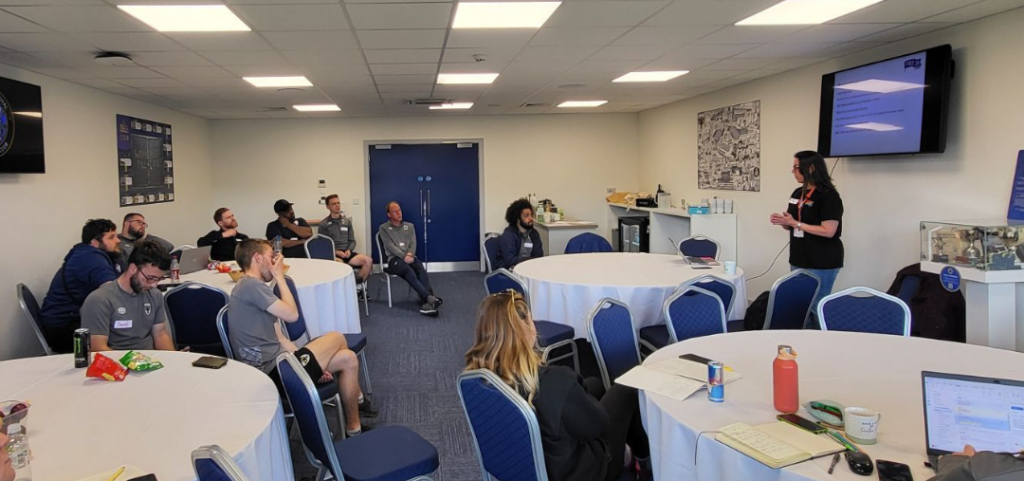
Civil Society Together (CST) invited our Co-Founder and Director Lucie Brooke to join a panel discussion on systems change in practice. CST brought together over 70 people from across the grassroots, civil society, infrastructure, statutory and funding sectors to explore what systems change looks like on the ground. Lucie joined Tom Bell from the Henry Smith Foundation and Kerry Edwards from the Burnside Centre in Rochdale as panellists. CST has since published the key takeaways as a three-part blog series, which we’d encourage anyone in the sector to read.
What is systems change?
Systems change is about addressing the root causes of problems rather than their symptoms, by transforming the underlying structures, relationships, behaviours, attitudes and norms that shape how society operates.
The work we were already doing
Through contributing to CST’s systems change evaluation of the LGBT+ Fund, Lucie came to realise that Free2B had been doing systems change all along, without having recognised it as such.

The Free2B Award (nicknamed “Quofsted” by our young people) is one example. Rainbow Power, our Youth Council visits local clubs, parks and schools, recognises genuinely inclusive spaces with a badge, and supports others to make the necessary changes. Local clubs, parks and schools have made positive changes as a result.
The training we deliver to schools, social workers, CAMHS workers and local authority staff is another. It draws on the knowledge and insights gained through service delivery to address the problems our young people regularly report experiencing.
We also asked our young people what the five things they most wanted schools and professionals to know were, and turned their answers into a postcard. Schools could act on it without extra funding. The result has been measurable: schools have moved towards gender neutral graphics and more inclusive language.
The barriers are real
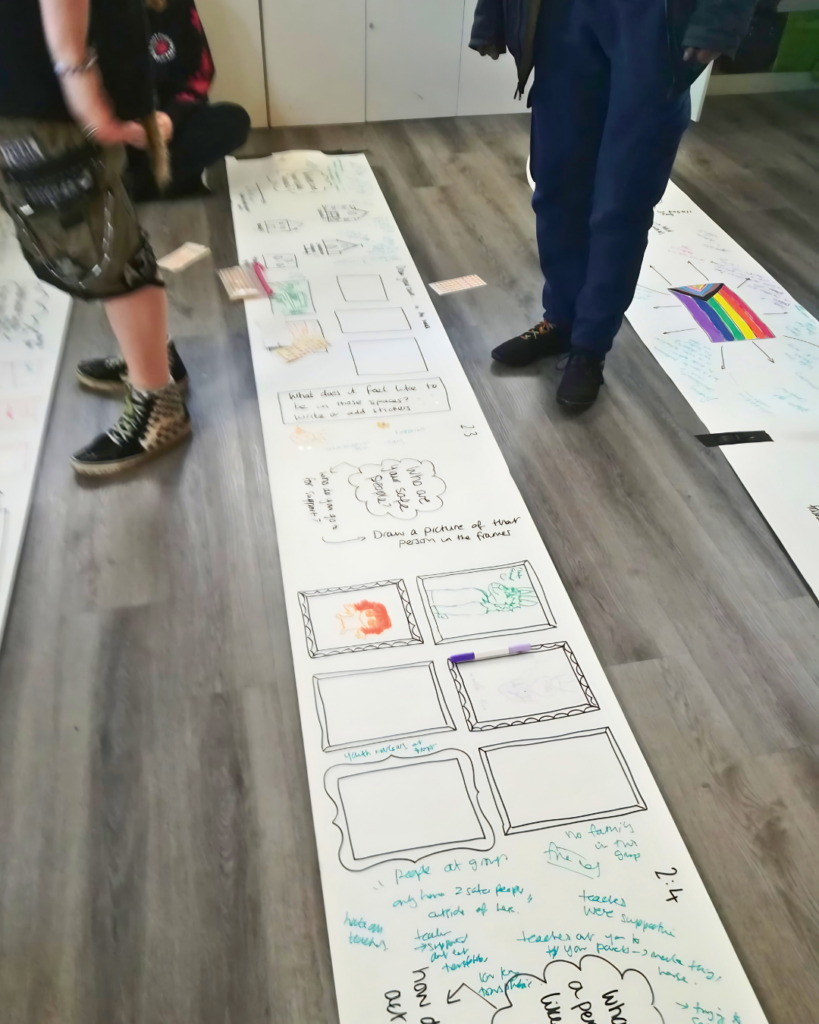
Lucie raised an important challenge in the discussion. LGBTQ+ young people are not always able to attend large consultation events because of the lack of gender neutral toilets, concerns around transport costs, mobility, and time of day. Her approach has been to ask external organisations to send consultation questions directly, take them to young people, and feed the responses back. Where possible, she has found it more effective to invite the system to come to Free2B rather than the other way around.
Preventing regression is important
CST’s evaluation of the LGBT+ Fund concluded that, in the current climate, preventing regression is itself a form of systems change. This includes pushing back against harmful policies, rhetoric, beliefs and actions that threaten the safety and dignity of LGBT+ communities. They called it “invisible systems change.” For an LGBTQ+ youth organisation this framing is important.
The wider message
Funders are not expecting organisations to do this alone. What they are increasingly looking for is an awareness of the wider system, a willingness to engage with it, and a commitment to collaboration.
Read CST’s three blogposts here:
Read part one: What funders look for and why you might be doing more systems change than you think
Read part two: The challenges for grassroots organisations and some considerations for funders
Read part three: Five tips for grassroots organisations